

State Apostilles authenticate state-issued documents – birth and marriage certificates, court orders, notarized instruments – for international use in Hague Convention countries.
What Is a State Apostille?
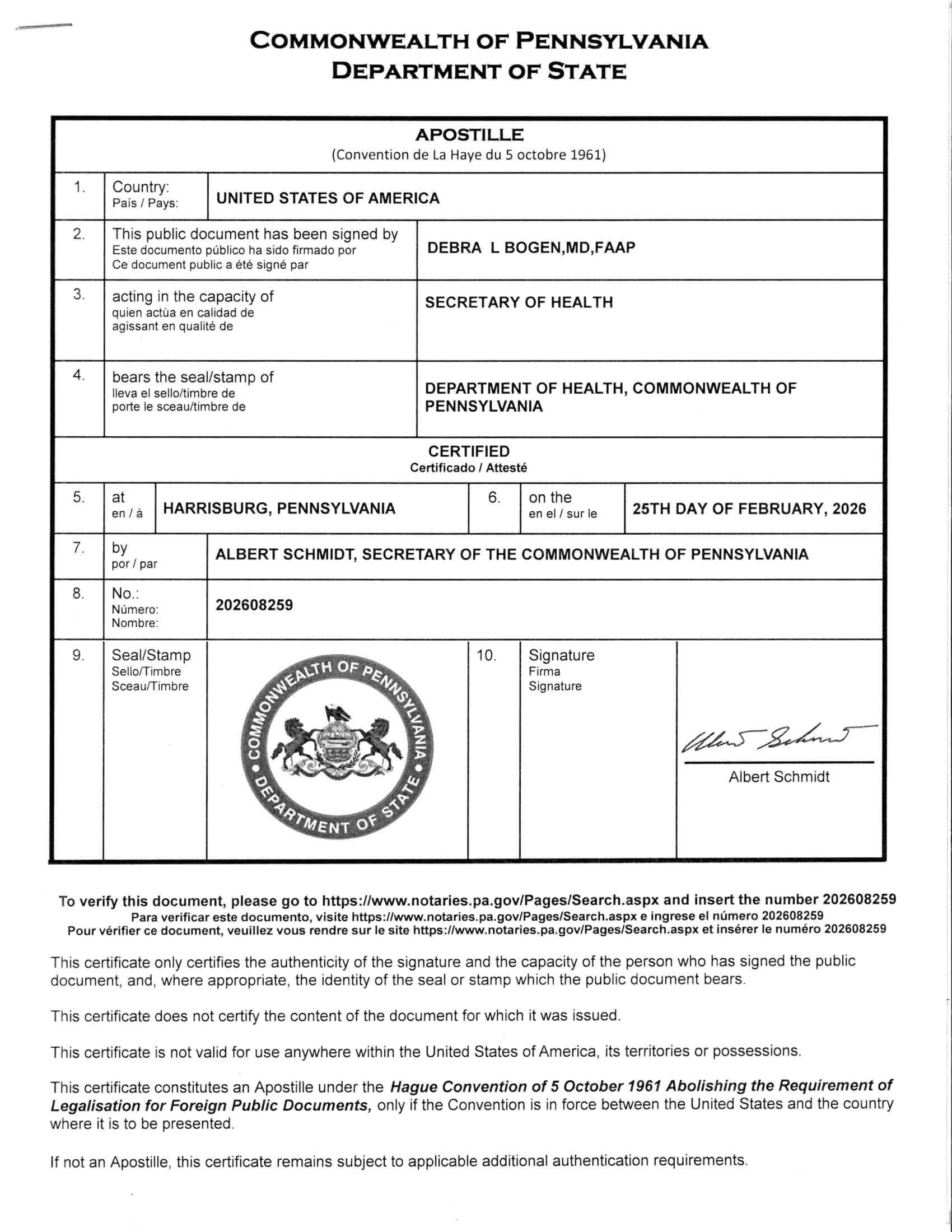
A state apostille is a certificate issued by a US state’s Secretary of State office that verifies the authenticity of a state-issued public document under the terms of the Hague Convention of 5 October 1961. Once attached, the apostille makes a document legally recognizable in any of the 120+ Hague member countries without further authentication.
The apostille itself follows a standardized international template, but the underlying process varies significantly from state to state – in terms of fees, acceptable document types, preliminary certification requirements, and processing timelines.
Which Documents Can Be Apostilled at the State Level?
Any document issued by a state government or notarized by a notary public commissioned in that state is eligible for a state apostille. Common examples include:
- Birth certificates, marriage licenses, and death certificates
- Divorce decrees and adoption records
- Court orders and judgments
- Notarized affidavits and powers of attorney
- Educational transcripts certified by a state education authority
- Police background checks issued by a state agency
Documents issued by federal agencies – such as FBI background checks or National Archives records – require a federal apostille processed through the US Department of State, not through a state office.
Which Countries Accept a US State Apostille?
The official list of Hague Convention member states can be found at hcch.net. Major accepting countries include all EU member states, the United Kingdom, Mexico, Brazil, China, India, Japan, South Korea, Australia, Canada, and over 100 others.
Countries not on this list – such as many in the Middle East, Southeast Asia, and parts of Africa – require legalization rather than an apostille. Legalization is a multi-step chain certification process that involves both state and federal authentication plus embassy approval.
How the State Apostille Process Works
At the state level, apostilles are issued by the Secretary of State’s office. The typical workflow is:
- Document originates from a state agency (vital records office, county court, etc.) or is notarized by a state-commissioned notary.
- Preliminary certification may be required – New York requires county-clerk certification for notarized documents before the Secretary of State will accept them. See our New York apostille guide.
- Secretary of State review verifies the signature and seal, then issues the apostille certificate.
- Document returned with the apostille attached.
State Apostille Fees – All 50 States
Apostille50 charges a flat $100 service charge per order plus the applicable state fee per apostille. State fees range from $1 (Michigan) to $50 (Connecticut), with a median fee of $10 per apostille. Federal-only orders skip the service charge – you pay $75 per federal document and nothing else. Total charge range: $75–$200. All fees are displayed on the Order page before you commit to checkout. Return shipping is always included.
Processing Times
Processing windows vary from same-day issuance (rare) to several weeks, depending on the state, seasonal volume, and whether expedited service is offered. Apostille50 submits documents promptly after receipt and keeps you updated by email at every stage: document received, submitted to the state authority, and shipped back.
How Apostille50 Handles Your State Apostille
We manage the entire process – routing, compliance checks, fee payments, and state-level submissions – so you never have to track down individual Secretary of State instructions or mail multiple packages to different offices. You mail your documents once; we handle the rest.
For documents originating from federal agencies, see our federal apostille service. For countries outside the Hague Convention, see our legalization service.
Ready to get started? Use the Order page to identify your documents and see the exact cost before checkout.
Frequently Asked Questions
What is a state apostille?
A state apostille is an authentication certificate issued by a US state’s Secretary of State office. It verifies the origin of state-issued public documents – such as birth certificates, marriage licenses, death certificates, and notarized documents – so they can be legally recognized in countries that are members of the Hague Convention of 1961.
Which documents can get a state apostille?
Any document issued by a state government or notarized by a notary public commissioned in that state can receive a state apostille. Common examples include birth certificates, marriage licenses, death certificates, divorce decrees, adoption records, powers of attorney, notarized affidavits, court orders, and educational transcripts certified by a state authority.
How long does a state apostille take?
Processing times vary by state, ranging from a few business days to several weeks. Apostille50 submits documents to each state’s Secretary of State office and provides email updates at each stage. Federal apostilles are processed with standard rush service of approximately two weeks.
How much does a state apostille cost through Apostille50?
Apostille50 charges a flat $100 service charge per order, plus the applicable state fee for each apostille. State fees range from $1 (Michigan) to $50 (Connecticut), and are charged per document. Return shipping is included at no extra cost.
Does Apostille50 cover all 50 states?
Yes. Apostille50 handles apostille requests for documents issued in all 50 US states and the District of Columbia. Each state has its own fee, which is displayed on the Order page before checkout.
What is the difference between a state apostille and a federal apostille?
A state apostille is issued by a state’s Secretary of State office and covers documents that originate at the state level, such as birth or marriage certificates. A federal apostille is issued by the US Department of State and covers documents that originate from federal agencies, such as FBI background checks or National Archives records. Using the wrong level of apostille will result in rejection.
Which countries accept a US state apostille?
Countries that are members of the Hague Convention of 1961 accept apostilles. There are over 120 member countries, including all EU nations, the United Kingdom, Mexico, Brazil, China, India, Japan, Australia, and many others. Countries not in the Hague Convention require a separate legalization process instead of an apostille.
